

The cryptocurrency Ethereum (ETH) is at a major turning point. As the supply of ETH on exchanges hits new lows, many analysts believe there could be an overwhelming price increase by 2026. Tight supply, rampant institutional demand, and good network fundamentals may be what drive the big break. In this article, we delve into why 2026 could be a new bull run for Ethereum and what might fuel it.
What Makes 2026 Special for Ethereum?
Cryptocurrency markets tend to be cyclical. Long periods of gradual or steady growth are sometimes followed by rapid growth. Many experts believe 2026 to be the start of something big for Ethereum. This belief is based on two major factors:
- Decreasing amount of ETH floating around for sale
- Increasing institutional demand
When there are fewer coins floating around and more serious players begin to buy coins, prices will start rising. For many traders and investors, 2026 is a good opportunity to get big returns.
Why Supply Shrink Matters for Price
| Driver | Description | Impact on Price (2026 Est.) | Supporting Metric |
|---|---|---|---|
| Staking/Restaking | ETH locked in networks (e.g., EigenLayer) | Reduces circulating supply by 20–30% | 30M+ ETH staked (current) |
| Layer-2 & DeFi Use | Bridged to L2s for scalability/efficiency | Locks 10–15% more ETH off exchanges | $50B+ TVL in L2s |
| Institutional Custody | Funds/treasuries holding long-term | 5–10% supply absorbed; stable demand | $10B+ ETF inflows Q1 2026 |
| Overall Squeeze | Exchange balances at historic 8.7% low | Upward pressure; past cycles +200% | 43% drop since July 2025 |
Ethereum supply shrink 2026
Exchange Supply Has Fallen to Historic Lows
Recent data provided by on-chain analytics reveals that the supply of ETH held on centralized exchanges has sharply reduced. According to a report, exchange balances recently dipped to only 8.7% of overall supply, which is the lowest level since 2015.
This decrease includes a 43% fall from early July 2025.
By contrast, more ETH is tied up in staking, long-term custody, and Layer 2 or institutional wallets.
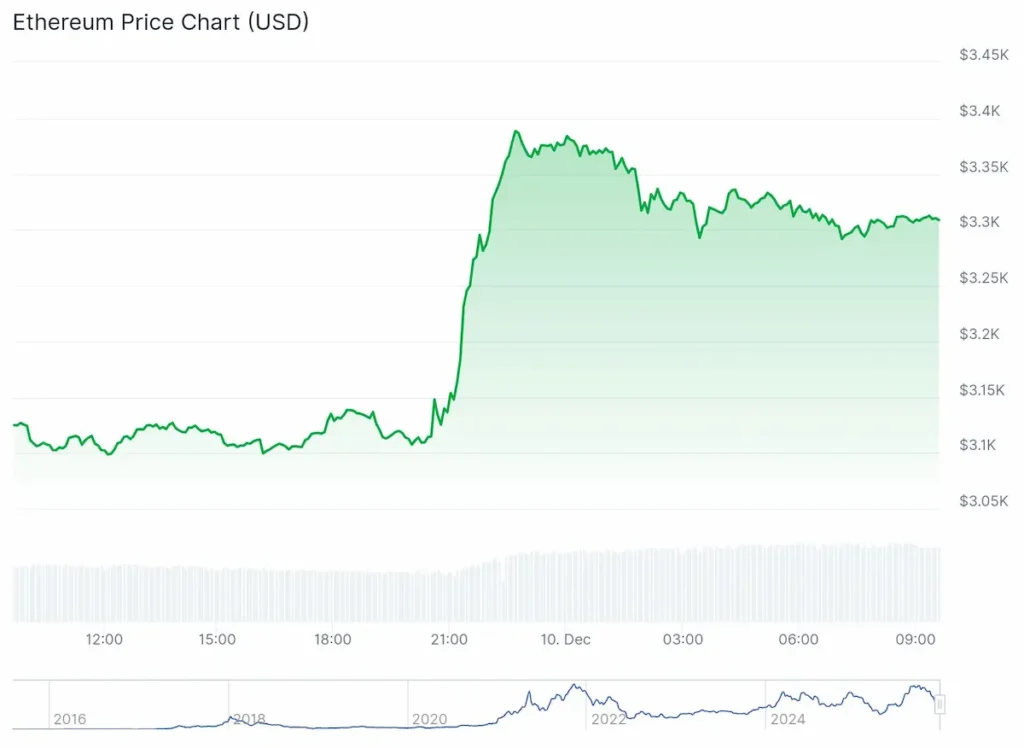
Less Supply Means Higher Price Pressure
When there are fewer ETH in order to sell, even just small demand can demand higher prices. With most coins locked away, the available “float” reduces. Many coins are not now ready to trade, so it increases liquidity.
In previous cycles of bulls, there were similar supply crunches and sharp price jumps. Many analysts now believe Ethereum may enter one such.
What’s Driving the Supply Shift?
Staking, Layer-2, Institutional Custody
- Staking and restaking: Many ETH holders have migrated their coins from exchanges into staking pools. Some go with restaking, meaning that they lock ETH to benefit network security in return for yields.
- Layer-2 networks & DeFi use: As more of the Ethereum ecosystem develops, the more ETH is transferred to layer-2 networks, decentralized applications (dApps), collateral loops, or long-term custody.
- Institutional investors & treasuries: Large institutions’ digital asset treasuries (DATs) and corporate holders continue to hoard ETH for long-term holdings. This decreases the circulating supply even more.
Since many of these holders have no plans to sell in the near future, the liquidity on exchanges has declined enormously.
Institutional Demand is Rising
Big Players are Buying
Investors such as companies, funds, and digital asset treasuries are putting Ethereum on their balance books. So far, some sources claim that cumulative inflows from institutional buyers, staking pools, and treasury buys have now taken a large chunk of all ETH.
This spike in demand is as more institutions start considering ETH to be a long-term asset.
ETFs and Institutional Products Help
New institutional products such as crypto funds and ETFs are another source of inflows. As all eyes land on the mainstream finance sector with the buzz of crypto adoption and investments, ETH in the mix is more appealing for a long-term allocation.
This kind of dynamic combination of shrinking supply and rising demand provides a good foundation for a price breakout if sufficient new money is applied to the market.
Technical and Market Signals Look Strong
Apart from supply and demand, there are market indicators that point to a possible breakout for ETH.
- According to analysts, the hidden accumulation apparent in recent trading volume and on-chain activity when the price is stable signals a typical event heading before a rally.
- Some models value ETH much higher than what it is trading for based on staking, supply locks, and network activity.
These signals bring weight to the argument that 2026 could bring a big upward move for Ethereum.
What Could Ethereum Reach by 2026?
| Phase | Timeline (2026) | Key Price Drivers | Target Range | Potential Upside/Downside |
|---|---|---|---|---|
| Accumulation | Q1 (Jan–Mar) | Supply squeeze (8.7% exchange low), ETF inflows start | $3,500–$4,500 | +20% (to $5K) / -10% (macro dip) |
| Momentum Build | Q2–Q3 (Apr–Sep) | Staking/restaking locks, institutional treasuries ramp | $5,000–$6,500 | +30% (L2 boom) / -15% (reg delays) |
| Breakout Peak | Q4 (Oct–Dec) | Full institutional demand, on-chain accumulation peaks | $7,000–$8,000 | +15% (to $10K Q1 2027) / -20% (profit-taking) |
| Overall Year | Full 2026 | Supply shrink + demand surge alignment | Up to $8,000 | 150–225% from $3,076 (current) |
ETH 2026 price forecast chart
Many analysts are now coming up with bullish predictions about ETH in the next 12-24 months. Some predict a move to $7,000-$8,000, assuming that the supply remains tight and demand keeps rising.
A few even consider $7,500 as a reasonable objective considering ongoing significant institutional inflows.
Even under moderate growth scenarios with ETH simply returning to previous highs, a move to $4,000-$5,000 seems reasonable.
What Could Go Wrong? Consider the Risks
We must remain realistic. Some key risks are accompanied by great upside potential:
- Macro conditions: Poor global economy or high financial conditions may reduce crypto demand.
- Regulatory changes: New regulations around crypto, stablecoins, or securities could weigh on investor appetite.
- Market shifts: If layer-2 solutions or new blockchains draw usage away from Ethereum, demand for ETH may slow.
- Profit taking: When a large number of long-term holders decide to sell off at the same time, the price might fall in spite of narrowed supply.
Therefore, while things are optimistic, nothing is guaranteed.
Read CoinDesk: 2026 Crypto Regulation Outlook
Why 2026 Could Be the Breakout Year
Putting all factors into a day of people’s thoughts. 2026 is surely a breakout window for Ethereum. Here’s why:
- Historic supply squeeze: Exchange-held ETH is near all-time lows, which means fewer tokens are ready to be sold.
- Strong institutional demand: The corporate, fund, and treasury demand for ETH still continues to be accumulated for the long haul.
- Network growth and staking: More ETH goes into staking and DeFi, and more is locked as supply in layer-2 networks.
- Valuation gap: Many valuation models find ETH undervalued at this moment, which may attract new buyers.
- Momentum indicates emerging: Oftentimes on-chain data and trading volume indicate accumulation hidden in plain sight, which often leads to frequent rallies.
If these trends continue, Ethereum could find a lot of buying pressure, which could push prices sharply up.
What Should Investors Do
If you do believe in this potential 2026 breakout, here are a few common-sense steps to take:
- Buy and hold quietly: Buying ETH and holding it back for 12-18 months may have great upside potential; we had tightness of supply and increased demand for ETH.
- Don’t try to time the bottom: There are very few times when trying to “catch the exact bottom” works. Instead, consider a technique of dollar-cost averaging (buying in small amounts periodically).
- Stay up-to-date: Monitor major supply and demand metrics such as exchange balances, staking rates, and ETF flows. These often move ahead of price.
- Be ready for volatility: Crypto markets are volatile. Never invest more than you can at least afford to lose.
You should go through the list of Top 5 Altcoins to Explode in Q1 2026
Conclusion
The end of 2025 and early 2026 could represent a significant change for Ethereum. With the exchange supply at record lows and institutional demand increasingly outperforming, it looks like the stage would be set for the possibility of a breakout. If the conditions remain favorable, ETH could easily be looking at $7,000-$8,000 for the end of 2026, possibly higher if momentum builds further.
Still, investors need to be careful. Market cycles are sometimes unpredictable. Yet, for those open to holding up and conducting volatility, Ether might provide some rare opportunity to ride a structural rally.
Note: This article provides analysis and not financial advice. Always do your own research when you are investing.
FAQs
How high will XRP be in 2026?
XRP’s potential for 2026 lies mainly in institutional adoption and global usage. Many analysts predict a price of up to $5 by mid-2026 if the growth in adoptions manages to continue. At the same time, there are some investors taking interest in some high-growth, low-cap projects such as DeepSnitch AI because they have come across a chance of making a lot more, even up to 100x, in the same time period as this.
Is XRP worth buying for the long term?
Yes, many investors think XRP has potential as a long-term investment. XRP is already making a real difference in a cross-border payment scenario, which makes it have practical utility. Long-term price growth will be dependent on reproduction or continual expansion of the Ripple ecosystem.
Is it better to invest in XRP or Bitcoin?
Bitcoin is the top cryptocurrency and the most reliable digital currency. However, the series of increasing XRP ecosystem and institutional use has allowed support growth for XRP. The superior investment in various parameters such as achievement, risk, and the desired return. Some users prefer to use Bitcoin for stability, while some prefer XRP due to potential higher growth.
What will 1 ETH be worth in 2030?
Analysts believe that there is strong growth for Ethereum in the long term. Many forecasts indicate ETH may get to $22,000 by 2030, which equals a 487% return from today’s price. This would amount to a 37.8% annual growth rate if adoption and network expansion continue.
Will Ethereum reach $10,000?
Many experts think Ethereum can hit $10,000 in the first quarter of 2026, which would represent a 225% increase from where they are at nearly $3,076. Predictions highlight key drivers like Ethereum ETFs, scaling technologies like Layer 2 solutions, and increased institutional demand. Some analysts also say three Ethereum-based tokens could offer gains of up to 3,500% in 2025.